




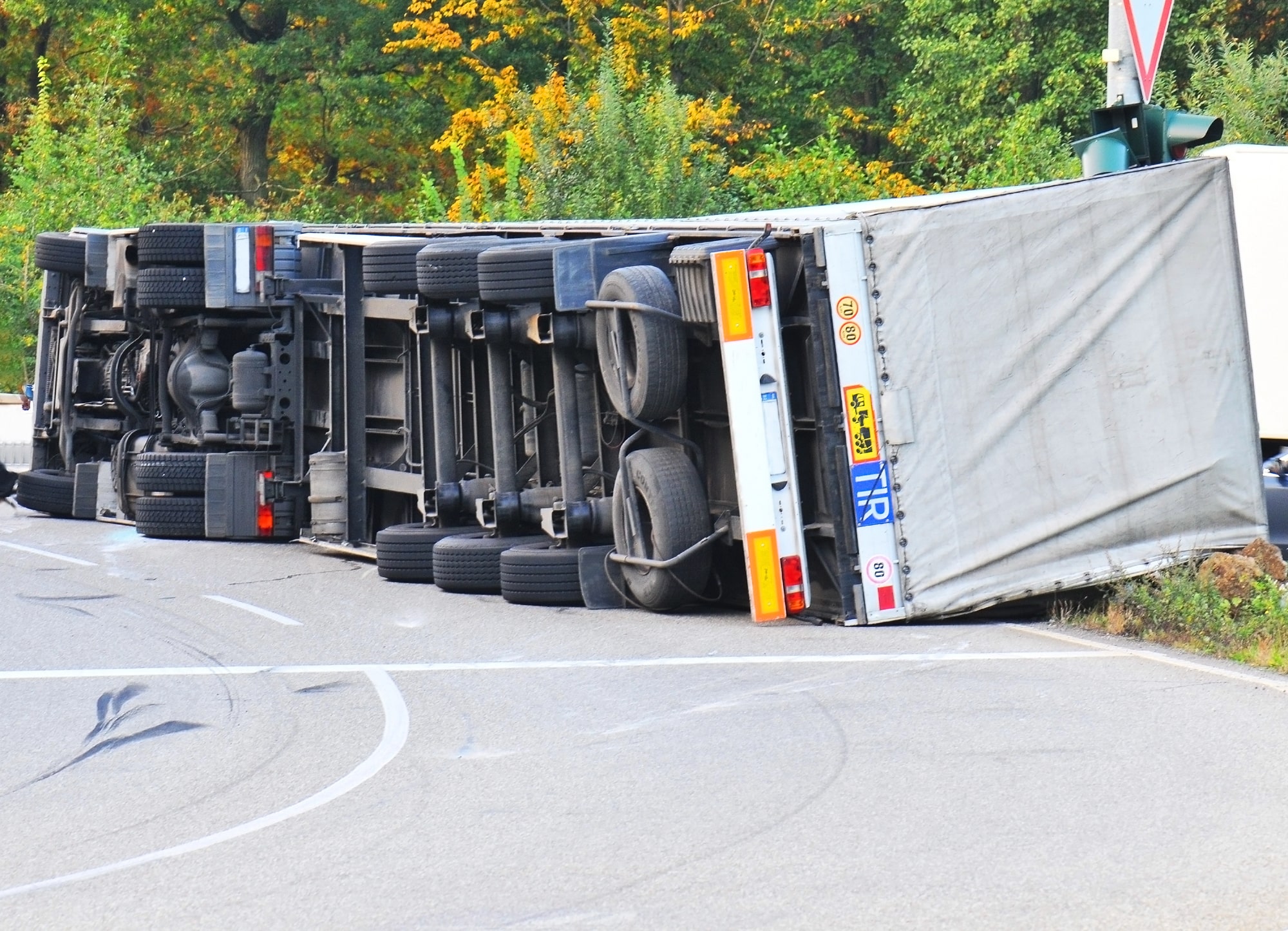
Were you injured in a tractor trailer accident in Minnesota?
At Johnston | Martineau PLLP, we pursue full recovery for injured clients and their families in tractor trailer accident matters.
If a tractor trailer jackknifed into your lane on a Minnesota highway, the tractor, the trailer, and the freight inside it may each belong to a different company. Our Minnesota tractor trailer accident lawyer identifies every one of those companies and the insurance policies behind them. Johnston | Martineau PLLP concentrates on commercial truck litigation and represents injured clients across Minnesota, Wisconsin, and Iowa. We take calls at any hour and welcome the chance to review what happened to you.
Tractor Trailer Accident Lawyer Minnesota
A tractor trailer accident lawyer represents people injured by a truck tractor pulling one or more trailers. Our work involves identifying the carrier and its insurers, and proving how the crash happened using the truck's own records and the physical evidence left at the scene.
Truck tractors pulling a semi-trailer were involved in 1,818 crashes on Minnesota roads in 2023, including 23 fatal crashes and 339 injury crashes, according to the Minnesota Crash Facts report. Trucks pulling a separate trailer added 955 more. Those figures cover every configuration described below, from flatbeds hauling steel to hopper trailers hauling grain, and each configuration fails in its own way.
Types of Tractor Trailer Accident Cases We Handle in Minnesota
A tractor trailer is a category rather than a single vehicle. What rides behind the fifth wheel shapes how a crash happens and who answers for it. Our tractor trailer accident attorneys in Minnesota handle claims involving every common configuration on the state's highways.
- Flatbed and oversize loads. Steel coils, lumber, and machinery ride exposed on flatbeds. A strap or chain that fails sends the load into traffic. Oversize permits, escort requirements, and the shipper's loading decisions all come into evidence.
- Refrigerated trailers. Reefers hauling food between Minnesota processors and the coasts run on tight delivery windows. Hours-of-service pressure appears in these cases more than most.
- Tanker trailers. Liquid cargo shifts with every brake application, which makes a partially loaded tanker prone to rollover on ramps and curves. Fuel and chemical loads add hazardous-material exposure to the injuries.
- Double trailers. Twin 28-foot trailers behind one tractor sway in crosswinds and track wide through curves. The rear trailer is the one that leaves its lane first.
- Livestock and grain haulers. Hopper-bottom grain trailers and cattle pots move through farm country on two-lane state highways. Overweight axles and slow entries onto county roads produce many rural crashes each harvest season.
- Dump truck accidents. End-dump trailers pulled by tractors haul aggregate to road projects across the state. A raised bed, an overloaded axle, or a spilled load can each set off a crash.
- Coal truck accidents. Coal and bulk-commodity haulers run at the top of the weight scale. When the scale ticket tells the story, the loading site often shares fault with the carrier.
- Logging trailers. Pole trailers hauling timber out of northern Minnesota carry loads that extend past the trailer frame. Unmarked overhang causes rear-end and cornering crashes on Highway 53 and Highway 2.
Why Choose Johnston | Martineau PLLP as my Tractor Trailer Accident Lawyer in Minnesota?
Litigation Concentrated on Semi-Trucks and Tankers
Christopher A. Johnston focuses his practice on truck accident litigation, particularly cases involving semi-trucks, tanker trucks, and commercial vehicles. He has been recognized by Super Lawyers five times. Earlier in his career, he was named Up and Coming Attorney of the Year in 2007 and a Rising Star in 2011. He also settled a claim for one million dollars, which earned him membership in the Million Dollar Advocates Forum. Mr. Johnston graduated from William Mitchell College of Law, now the Mitchell Hamline School of Law. He is licensed in Minnesota and Iowa, and he is admitted to the Eighth Circuit Court of Appeals and the U.S. District Court for the District of Minnesota.
Recoveries Built on Every Available Policy
A tractor trailer claim rarely involves just one defendant. The tractor may be owned by one company, the trailer by another, and the freight arranged by a broker. Each of these parties usually has its own insurance. Finding every policy is often the difference between a settlement capped at one policy's limits and a full recovery. Christopher P. Martineau founded our firm and is licensed in Minnesota and Wisconsin. He is a member of the Academy of Truck Accident Attorneys, and his practice centers on truck collisions and wrongful death claims. Our truck accident lawyer in Minnesota takes that same approach in every commercial vehicle case, and our results include millions of dollars recovered for injured clients.
What Is Important to Understand About a Tractor Trailer Accident Case?
Damages, Liability, and Compensation for Tractor Trailer Accident Cases
Minnesota follows modified comparative fault under Minn. Stat. § 604.01. An injured person whose share of fault is not greater than the defendant's can recover, with the award reduced by that share. Because insurers argue fault aggressively, proving fault determines whether tractor trailer case is won or lost. When the crash is fatal, Minn. Stat. § 573.02 allows a court-appointed trustee to pursue a wrongful death claim for the surviving spouse and next of kin.
Recoverable losses generally include:
- Emergency care, surgery, and hospitalization
- Rehabilitation and future medical treatment
- Wages lost during recovery and reduced earning capacity afterward
- Physical pain and the loss of normal activities
- Damage to your vehicle and personal property
- Pecuniary loss to the family in a wrongful death claim
What Is the Tractor Trailer Accident Case Timeline?
Most negligence claims in Minnesota carry a six-year filing deadline under Minn. Stat. § 541.05, and wrongful death claims must be filed within three years of the death. A tractor trailer case moves through the stages below, and the first two happen in weeks rather than months.
- A preservation demand goes to the carrier, the trailer owner, and each insurer.
- We collect the crash report, the driver's logs, and the truck's electronic data.
- Medical treatment continues until your physicians can state a long-term prognosis.
- A written demand, supported by records and reconstruction where needed, goes to every insurer with coverage.
- Negotiation follows, and suit is filed if the insurers will not pay fair value.
- Trial, in the minority of cases where no reasonable settlement is offered.
What Are Important Aspects of a Tractor Trailer Accident Case?
Federal safety rules govern most tractor trailers on Minnesota roads. The driver's hours are limited, and hours-of-service violations are among the most common findings in a fatigue crash. The load must be tied down under the FMCSA's cargo securement rules, and a shifted or fallen load usually points to the shipper or loader as well as the driver. Weather does not excuse either. A carrier that dispatches a rig into a Minnesota blizzard answers for winter's role in the crash alongside its driver.
Evidence is the other half of the case. Engine data, dash camera footage, and dispatch messages exist for a limited time. A demand to preserve them has to reach the carrier before the normal overwrite cycle erases them, which is why the first call to us matters more than the tenth.
What Should You Bring to Your Tractor Trailer Accident Consultation?
- The crash report or the incident number from the responding agency
- Photographs of the tractor, the trailer, and the cargo, including any USDOT or trailer markings
- Medical bills and records to date
- Correspondence from any insurer, including your own
We review the crash and explain which deadlines apply. You leave with a frank assessment of the claim's strength. The meeting carries no fee, and it does not obligate you to hire us.
Most Dangerous Locations for Tractor Trailer Accidents in Minnesota
Tractor trailer crashes in Minnesota follow the freight. The routes below carry the heaviest semi traffic in the state and produce a large share of the serious collisions we handle.
Interstates and U.S. highways:
- Interstate 35 between Hinckley and Duluth. Long grades and lake-effect ice combine on the northern leg, where loaded rigs lose traction on the descent into the city.
- Interstate 90 from Worthington to Austin. Crosswinds across open prairie push high-sided trailers out of their lanes at sustained speed.
- U.S. Highway 52 between St. Paul and Rochester. Expressway crossings without interchanges put turning trucks in the path of through traffic.
- U.S. Highway 169 through Mankato and the southwest metro. Aggregate and agricultural haulers mix with commuter traffic on a route that changes speed limits often.
- U.S. Highway 10 between Elk River and St. Cloud. Signalized intersections on a high-speed freight route produce rear-end crashes into stopped traffic.
State highways and rural routes:
- Highway 23 from St. Cloud to Marshall. A two-lane freight link whose passing zones invite head-on collisions with loaded semis.
- Highway 60 and Highway 71 in the southwest. Grain and livestock haulers share two-lane roads with uncontrolled county-road crossings.
- Highway 53 and U.S. Highway 2 north of Duluth. Logging and mining trucks run narrow lanes alongside tourist traffic.
- County roads at grain elevators and ethanol plants. Slow, heavy turns across highway traffic during harvest.
Reach Out to Johnston | Martineau PLLP to Schedule a Consultation
When a tractor trailer causes a crash, the companies behind it begin protecting themselves the same day. Our tractor trailer accident attorney in Minnesota begins protecting your claim just as quickly, with a preservation demand and an investigation built for trial. Johnston | Martineau PLLP offers free consultations, and our phones are answered 24 hours a day. Contact us to talk with us about your case.