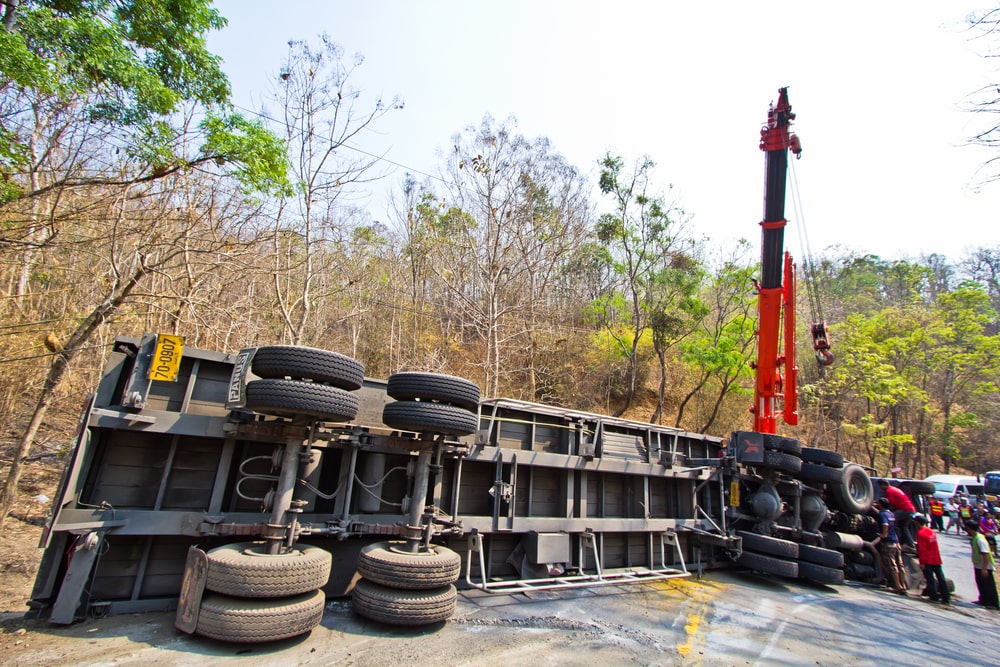



A semi-truck rollover on a curved ramp in St. Paul recently brought traffic to a standstill and renewed concerns about roadway safety. According to the Minnesota State Patrol, the truck rolled while driving along the curve from southbound I-35E to Highway 52, spilling scrap metal and closing the ramp for several hours. The driver sustained only minor injuries, but the incident disrupted traffic and highlighted how quickly large commercial vehicles can become hazards when control is lost. Situations like this are often reviewed by our St. Paul, MN semi truck accident lawyer to determine whether preventable factors, including equipment issues or safety oversights, played a role.
The crash remains under investigation, but rollovers on curves are a known risk for semi-trucks, especially when carrying heavy or shifting loads like scrap metal. Even at moderate speeds, the high center of gravity in tractor-trailers can make curves dangerous if braking, steering, or load stability systems are not functioning properly. While weather and road design matter, technology increasingly plays a role in preventing or mitigating these incidents.
Modern commercial trucks can be equipped with advanced safety technologies designed to reduce rollover risks and improve driver awareness. However, not all trucking companies choose to install or maintain these systems. When accidents occur, our truck accident lawyers often examine whether missing or disabled technology contributed to the crash. The St. Paul rollover serves as a reminder that safety decisions made long before a truck hits the road can have real-world consequences for drivers and the public.
How Semi-Truck Safety Technology And Legal Accountability Intersect
Many rollover crashes can be reduced or avoided with existing safety technology. Electronic Stability Control (ESC) systems, for example, automatically apply braking to individual wheels to help drivers maintain control on curves. Roll stability control builds on this by monitoring load shift and speed to prevent tip-overs. Collision mitigation braking systems can detect hazards and reduce speed before a driver reacts. Lane departure warnings help keep trucks centered, and load monitoring technology alerts drivers when cargo shifts dangerously.
So why do some companies skip these systems? Cost is a major factor. Advanced safety technology requires upfront investment and ongoing maintenance. Smaller carriers, or those prioritizing short-term profits, may choose minimum compliance rather than enhanced protection. In some cases, systems are installed but improperly maintained or intentionally disabled due to nuisance alerts or repair expenses. When that happens, liability can extend beyond the driver to the carrier itself.
After a crash, our St. Paul semi truck accident lawyers analyze maintenance records, onboard data, and company safety policies to determine whether reasonable steps were taken to prevent the incident. If technology that could have reduced the risk was ignored, that decision may be central to a claim. Victims of rollovers or cargo spills often rely on our freight truck lawyers to uncover these details and pursue accountability. And because we offer 24/7 support, our clients know they can reach us at any time of day or night for legal aid. We also provide free consultations, so accident victims don’t have to worry about paying a dime when they’re trying to find the right lawyer. Our firm’s core mission is to help those in need. That’s why our clients choose us every time.
At Johnston | Martineau PLLP, we understand how technical failures and corporate choices intersect in serious truck crashes. If you or someone you care about was injured in a commercial truck accident, speaking with our St. Paul semi truck accident attorneys can help clarify your options. Our team reviews every angle, from roadway design to safety technology, to protect your interests. Contact us today to discuss your situation with our semi-truck lawyers and learn how we can help you move forward.