
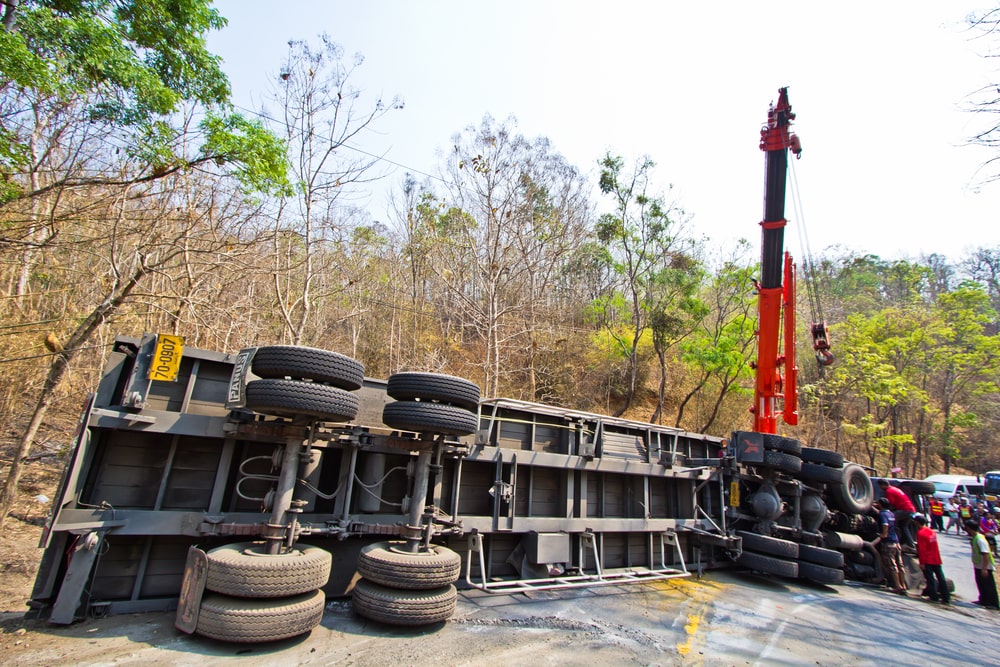
Tow truck accidents are rarely straightforward from a legal standpoint. There's almost never just one party involved, and figuring out who's actually responsible means looking well beyond the driver behind the wheel. Depending on the circumstances, a Minnesota tow truck accident can involve multiple liable parties, and identifying all of them early is one of the most consequential steps in building a claim that actually accounts for everything you've lost.
The Tow Truck Driver
Start with the obvious. If the crash happened because of driver error, inattention, fatigue, or a failure to follow basic traffic laws, the driver carries direct personal liability. Commercial drivers owe a heightened duty of care to everyone else on the road, full stop. The size and weight of the vehicles they operate demand it.
Common driver failures that lead to these crashes include:
- Failing to check blind spots before changing lanes
- Following too closely behind other vehicles
- Driving while fatigued after an extended shift
- Failing to properly secure a towed vehicle before moving
- Ignoring traffic signals or failing to yield
When the driver's conduct caused the crash, their personal liability is on the table. But in most serious injury cases, pursuing only the driver won't get you where you need to go.
The Towing Company
Employers are generally liable for the negligent acts of their employees within the scope of employment. That's the respondeat superior principle, and it means the towing company that employed the driver typically shares liability for what the driver did. That alone makes the company a significant party in most cases.
But towing companies can also face their own independent claims, separate from the driver's conduct entirely. Negligent hiring is one. If a company brought on a driver with a documented history of violations or prior accidents and skipped meaningful background checks, that decision creates its own exposure. Negligent supervision is another. Companies that fail to enforce safety policies or address known performance problems don't get to wash their hands of the consequences.
And then there's maintenance. Tow trucks need regular upkeep. Brake failures, tire blowouts, and lighting malfunctions that trace back to neglected maintenance are the company's responsibility. When those failures contribute to a crash, the liability follows.
In serious accident cases, the towing company often represents the most significant source of recovery, partly because commercial insurance policies carry coverage limits that dwarf individual driver policies.
The Dispatching Business
This one gets overlooked more than it should. A lot of tow trucks operate under contracts with motor clubs, insurance companies, dealerships, or municipal agencies that dispatch them. When a dispatching company sends an inadequately equipped truck, creates unrealistic time pressure that pushes unsafe driving, or otherwise contributes to the conditions that led to the crash, they don't automatically escape responsibility just because they weren't the ones driving.
It's worth investigating who made the call and under what circumstances.
Vehicle or Equipment Manufacturers
If a mechanical defect contributed to the crash, product liability claims against the manufacturer may apply. Defective braking systems, faulty towing mechanisms, structural failures. Any of these can pull a manufacturer, distributor, or component installer into the liability picture. These claims require expert analysis to establish the defect and connect it to the crash, but they can be an important piece of the overall case when mechanical failure played a role.
Third Parties and Property Owners
Sometimes the conditions at the scene matter too. Poor road maintenance, missing signage, inadequate lighting, hazardous conditions on private property. Government entities and property owners who were responsible for maintaining safe conditions can share liability when those failures contributed to the accident.
One important note if a government entity is involved: Minnesota has specific procedural requirements for claims against public bodies, including notice deadlines under Minnesota Statute Section 466.05 that are significantly shorter than standard civil filing deadlines. Miss those windows and you can lose an otherwise valid claim entirely.
Why Getting This Right Matters
Catastrophic injuries from tow truck accidents carry enormous financial consequences. Medical costs, extended lost income, long-term care needs, and significant non-economic damages add up fast. Pursuing only one liable party when several share responsibility means leaving compensation on the table that you're legally entitled to recover. It happens more than it should, usually because the full liability picture wasn't mapped out at the start.
Johnston | Martineau PLLP represents victims of serious commercial vehicle accidents throughout the Minneapolis area. If you were hurt in a tow truck crash and want to understand who can actually be held accountable for what happened, speaking with a Minneapolis tow truck accident lawyer is the right place to start.