




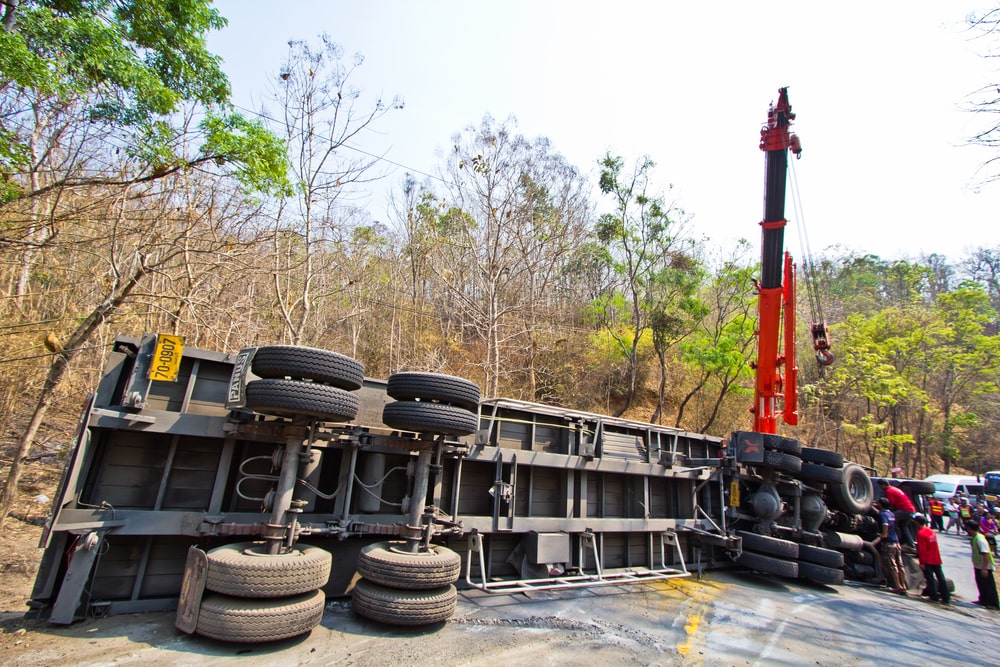
Truck Accident Lawyer Lakeville, MN
Johnston | Martineau PLLP represents truck accident victims throughout Dakota County, including Lakeville and the southern Twin Cities suburbs. Our Lakeville, MN truck accident lawyers have litigated against major trucking carriers, regional freight companies, and the insurance organizations that defend them. We understand how these defendants approach litigation, what evidence establishes negligence, and how quickly critical documentation disappears without immediate preservation efforts.
Christopher A. Johnston has secured settlements exceeding one million dollars, earning membership in the Million Dollar Advocates Forum. Christopher P. Martineau is a member of the Academy of Truck Accident Attorneys. Chris Johnston has earned the Super Lawyers designation five times.
Contact us for a free consultation. We collect no fees unless we recover compensation for you.
Why Choose Johnston | Martineau PLLP for Truck Accident Cases in Lakeville, Minnesota?
Attorneys Concentrated on Truck Accident Litigation
Truck accident cases involve complexities that distinguish them from standard motor vehicle claims. Federal regulations govern commercial trucking. Multiple defendants may share liability. Insurance policies run into the millions, funding aggressive defense efforts. Attorneys who handle truck cases occasionally lack the focused experience these matters demand.
Christopher A. Johnston and Christopher P. Martineau founded this firm with truck accident litigation as a central practice area. Chris Johnston has established himself as a leading attorney in this field, concentrating on collisions involving semi-trucks, tanker trucks, and commercial fleet vehicles. He maintains bar admissions in Minnesota and Iowa, with admission to the U.S. Court of Appeals for the 8th Circuit and Federal Court for the District of Minnesota. Chris Martineau handles truck accidents, semi-truck collisions, wrongful death matters, and significant motor vehicle crashes. He is admitted in Minnesota, Wisconsin, and the U.S. District Court for the District of Minnesota.
Substantial Recoveries for Truck Accident Victims
Our firm has secured millions of dollars for truck accident victims throughout Minnesota. Chris Johnston's million-dollar settlement qualified him for the Million Dollar Advocates Forum, an organization accepting only trial lawyers who have achieved verdicts or settlements at that threshold.
Results matter, but process matters as well. We maintain regular communication with clients throughout their cases. We explain strategy and developments in accessible terms. We do not accept inadequate settlements to resolve files quickly. We pursue full compensation for the injuries and losses our clients have suffered.
Recognition Reflecting Performance
Chris Johnston has received the Super Lawyer designation on five occasions. Earlier in his career, he earned Rising Star recognition in 2011, was named among Minnesota's Outstanding Young Lawyers that same year, and received the Up and Coming Attorney of The Year award in 2007. These distinctions result from peer evaluation and professional assessment rather than paid directory listings.
Chris Martineau holds membership in the Minnesota Association for Justice and the Minnesota State Bar Association. Both founding partners completed legal education at established Minnesota institutions. Johnston graduated from William Mitchell College of Law. Martineau earned his degree from Hamline University School of Law.
Contingency Fee Representation
Financial concerns should not prevent truck accident victims from obtaining quality representation. We handle these cases on contingency. No hourly billing. No upfront retainers. If we do not secure compensation, you owe nothing. This arrangement aligns our interests with yours and reflects our confidence in the cases we accept.
What Our Clients Say
⭐⭐⭐⭐⭐
"I had another attorney start my case after a bad car accident and he dropped the ball. Chris and his team took over and was attentive to detail and were very persistent with the insurance companies to get the best settlement for me possible. I would highly recommend Johnston Martineau for any legal matters you may have. They are in constant communication, so you are never left in the dark. Thanks again Chris and team!" – Gordon Neumann
Read more reviews on our Google Business Profile.
Types of Truck Accident Cases We Handle in Lakeville
Truck collision litigation differs fundamentally from standard automobile accident claims. Commercial trucking operates under federal regulatory oversight. Multiple parties frequently share liability. Insurance coverage extends into the millions, enabling well-funded defense strategies. Effective representation requires attorneys who understand these dynamics and know how to navigate them.
Our Lakeville truck accident attorneys represent clients in the following case types:
- Semi-truck accidents. Loaded semi-trucks weigh up to 80,000 pounds compared to approximately 4,000 pounds for passenger vehicles. This disparity produces catastrophic injuries and fatalities with disturbing frequency.
- 18-wheeler accidents. Driver fatigue, hours-of-service violations, and distracted operation contribute to many 18-wheeler collisions. We obtain electronic logging device data and driver qualification files that establish negligence.
- Tractor-trailer accidents. Jackknife events, underride crashes, and rollovers occur when equipment fails or drivers exceed safe parameters. We understand federal trucking regulations and use violations to establish liability.
- Commercial truck accidents. Delivery vehicles, box trucks, and corporate fleet trucks cause serious collisions throughout Dakota County. When motor carriers bear responsibility, we pursue claims directly against them.
- Big rig accidents. Highway crashes on I-35 and Highway 50 near Lakeville involve big rigs traveling at highway speeds. These cases demand immediate evidence preservation and investigation of multiple potential defendants.
- Fatal truck accidents. When truck collisions cause death, surviving family members face grief compounded by financial uncertainty. We handle wrongful death claims with appropriate care, pursuing compensation for funeral expenses, lost income, and loss of companionship.
- Fuel truck accidents. Tanker trucks transport flammable and hazardous cargo through Lakeville regularly. Collisions may result in fires, explosions, or chemical exposure, creating liability scenarios involving multiple regulatory frameworks.
- Logging truck accidents. Improperly secured loads transform logs into projectiles during collisions. We have represented victims in cases involving cargo securement violations and understand how to prove loading negligence.
Minnesota Legal Requirements for Truck Accident Cases
 State and federal law governs truck accident claims filed in Lakeville. Understanding these requirements provides context for evaluating your case.
Statute of Limitations
Minnesota law provides six years to file most personal injury lawsuits following a truck accident under Minnesota Statutes § 541.07.
This period appears substantial. Practical considerations suggest otherwise. Evidence degrades over time. Electronic records get overwritten. Witnesses move, change employers, or lose recall of critical details. Trucking companies destroy documentation once retention periods expire. Waiting several years may mean essential evidence no longer exists. Contacting a Lakeville truck accident attorney early preserves options and documentation.
Claims involving government vehicles face considerably shorter deadlines. Missing applicable notice requirements eliminates your right to pursue legal action regardless of fault.
Comparative Fault
Minnesota applies modified comparative fault under Minnesota Statutes § 604.01. Injured parties may recover damages if they bear less than 51% responsibility for the accident. Compensation decreases proportionally by the claimant's fault percentage.
An example: a jury awards $350,000 but finds you 20% at fault. Your recovery becomes $280,000. Insurance adjusters understand this rule thoroughly and search for any basis to attribute fault to claimants. An experienced truck accident lawyer in Lakeville, MN recognizes these tactics and builds evidence to counter them.
Federal Motor Carrier Safety Regulations
Commercial trucks operating in interstate commerce must comply with Federal Motor Carrier Safety Administration regulations. These rules address hours of service, vehicle maintenance requirements, driver qualification standards, drug and alcohol testing, and cargo securement specifications. Regulatory violations constitute strong evidence of negligence.
FMCSA hours-of-service regulations limit driver operating time. Property-carrying drivers may not operate beyond 11 hours following 10 consecutive hours off duty. They may not drive past the 14th hour after beginning an on-duty period. Violations are common and typically documented in electronic logging devices obtainable through litigation.
Minnesota Commercial Vehicle Laws
State law supplements federal requirements. Under Minnesota Statutes § 169.783, law enforcement may inspect commercial vehicles following accidents causing death, injury, or substantial property damage. Inspection findings frequently identify maintenance deficiencies or equipment failures supporting liability determinations.
The Minnesota Department of Transportation enforces weight and load regulations for commercial vehicles. Overloaded trucks exhibit compromised braking performance and handling characteristics that increase collision severity.
What Damages Are Recoverable in Lakeville Truck Accident Cases?
Minnesota law permits truck accident victims to pursue compensation across multiple damage categories. Understanding available recovery assists in setting appropriate expectations.
Economic Damages
Economic damages represent quantifiable losses supported by documentation. Medical expenses typically constitute the largest component: emergency response, hospitalization, surgical intervention, diagnostic imaging, rehabilitation therapy, prescription medications, and anticipated future treatment. Lost wages for time away from work and diminished earning capacity for those unable to return to previous occupations are similarly compensable.
Property damage encompasses your vehicle, personal belongings, and other items destroyed in the collision. Additional economic damages may include medical transportation costs, home modifications necessitated by disability, and hired assistance for tasks you can no longer perform.
Economic damages in serious truck accident cases regularly reach six figures. Seven-figure calculations occur when injuries require extended treatment or produce permanent impairment.
Non-Economic Damages
Certain losses do not generate documentation. Minnesota permits recovery for pain and suffering, encompassing physical discomfort and functional limitations resulting from injuries. Emotional distress addresses psychological consequences including anxiety, depression, and post-traumatic symptoms.
Loss of enjoyment of life addresses recreational activities, hobbies, and experiences victims can no longer pursue. Permanent disfigurement or disability affects self-perception and social function. Loss of consortium compensates for impact on spousal relationships.
Insurance carriers consistently attempt to minimize non-economic damages. Experienced Lakeville truck accident lawyers understand documentation strategies that effectively communicate the extent of these losses.
Punitive Damages
Minnesota authorizes punitive damages in cases involving egregious misconduct. Under Minnesota Statutes § 549.20, claimants must demonstrate by clear and convincing evidence that defendants acted with deliberate disregard for others' safety.
Intoxicated truck operators may satisfy this threshold. Trucking companies that knowingly dispatch unqualified drivers or falsify maintenance records may face punitive liability. These damages serve punitive and deterrent functions.
Wrongful Death Damages
When truck accidents cause death, Minnesota law authorizes designated family members to pursue wrongful death claims. Recoverable damages include funeral expenses, lost financial contributions the deceased would have provided, loss of parental guidance for minor children, loss of spousal companionship, and conscious pain and suffering experienced by the deceased before death.
What Steps Should You Take After a Truck Accident?
Actions taken in the hours and days following a truck accident significantly affect your ability to recover compensation. The following steps protect both your health and legal interests.
Step 1: Ensure your safety. If physically able, relocate away from traffic. Activate vehicle hazard lights. Remain at the scene unless staying creates additional danger.
Step 2: Contact emergency services. Call 911 to report the accident and request medical assistance for injured parties. Law enforcement will respond and create an official accident report.
Step 3: Seek medical evaluation. Obtain medical attention even without apparent injuries. Traumatic brain injuries, internal bleeding, and spinal damage frequently present delayed symptoms. Medical documentation created promptly establishes the connection between injuries and the collision.
Step 4: Document the scene thoroughly. Photograph vehicle damage, skid marks, debris, road conditions, traffic signals, and visible injuries. Record the truck's license plate, USDOT number, and carrier identification.
Step 5: Gather witness information. Obtain names, phone numbers, and email addresses from observers. Witnesses become difficult to locate over time. Information collected at the scene may prove irreplaceable.
Step 6: Limit fault statements. Do not apologize or speculate about causation. Provide factual responses to law enforcement. Scene statements can be used against you in subsequent proceedings.
Step 7: Preserve all evidence. Retain medical records, billing statements, correspondence with insurers, and photographs. Do not authorize vehicle repairs or disposal without consulting counsel.
Step 8: Notify your insurance carrier. Policy terms require prompt notification. Provide basic factual information only. Decline recorded statements and early settlement discussions pending legal consultation.
Step 9: Avoid social media activity. Do not post about the accident, injuries, or recovery online. Insurance investigators monitor claimants' profiles. Content depicting you in positive circumstances may undermine injury claims.
Step 10: Consult a truck accident attorney. Electronic data stored in trucks gets overwritten. Dashcam recordings disappear. Driver logs may be altered. Trucking companies deploy legal teams immediately following accidents. You should have equivalent representation.
Truck Accident Statistics Affecting Lakeville
 Statistical context illustrates truck accident risks facing Lakeville and Dakota County residents.
The Minnesota Department of Public Safety documents hundreds of serious injuries and multiple fatalities from large truck crashes across the state annually. Lakeville's position along major freight corridors increases local exposure. Interstate 35, the primary north-south route connecting the Twin Cities to southern Minnesota and Iowa, carries substantial commercial truck traffic directly through the city.
National data from FMCSA shows large trucks overrepresented in fatal collisions relative to total miles traveled. Contributing factors include driver fatigue, excessive speed, distraction, impairment, and persistent hours-of-service violations despite enforcement efforts.
Minnesota winters compound risks significantly. The Minnesota Department of Transportation documents elevated crash frequencies during winter months when ice and snow compromise vehicle control. Commercial trucks require substantially greater stopping distances than passenger vehicles. This disparity proves critical on winter roads along I-35 through Lakeville.
Collision physics governs outcomes. Commercial trucks outweigh passenger cars by ratios of 15 to 20. Energy transfer follows mass ratios during impact. Passenger vehicle occupants sustain disproportionate harm: traumatic brain injuries, spinal cord damage, multiple fractures, internal organ trauma, amputations.
Lakeville residents traveling I-35 toward the Twin Cities or south toward Faribault share roads with thousands of commercial trucks daily. Some are operated by fatigued drivers. Others have equipment requiring maintenance. Still others carry improperly secured cargo.
Lakeville Truck Accident Lawyer FAQs
What does hiring a truck accident lawyer cost?
We handle truck accident cases on contingency. Clients pay no fees unless we recover compensation. Consultations are free.
Which parties may be liable after a truck accident?
Multiple parties may share responsibility: the driver, the trucking company, cargo loading contractors, equipment manufacturers, maintenance providers. Investigation identifies liable parties in each case.
Can I recover compensation if partially at fault?
Minnesota permits recovery for claimants less than 51% responsible. Compensation decreases by your fault percentage. Insurance carriers attempt to shift blame. We counter with evidence.
What is the filing deadline for truck accident lawsuits?
Minnesota generally provides six years for personal injury claims. However, evidence deteriorates. Prompt consultation preserves options.
Should I accept the insurer's initial settlement offer?
Initial offers typically undervalue claims. Insurers anticipate claimants accepting before understanding actual case worth. We evaluate thoroughly before advising on settlements.
What evidence matters in truck accident cases?
Critical evidence includes electronic logging data, driver records, maintenance files, dashcam footage, drug test results, and carrier safety history. This evidence disappears quickly.
How long do truck accident cases take to resolve?
Timelines vary by complexity. Clear liability cases may settle within months. Disputed or severe injury cases may require a year or more. Trials extend timelines further.
Will my case go to trial?
Most cases settle through negotiation. When insurers refuse reasonable compensation, we try cases before juries. Our attorneys have courtroom experience throughout Minnesota.
How should I respond to trucking company contact?
Do not communicate with trucking company representatives. Do not sign their documents. They gather information to minimize claims. Communications should proceed through your attorney.
Can I sue if a family member died in the accident?
Minnesota authorizes wrongful death claims by surviving family members. Damages include funeral costs, lost financial support, and loss of companionship.
How do truck accidents differ from car accidents?
Federal regulations apply to commercial trucking. Multiple defendants may share liability. Insurance policies are larger but fund aggressive defense.
Do trucking companies carry larger insurance policies?
Federal law mandates minimum coverage of $750,000 for most interstate carriers. Hazmat transporters must carry more. Larger policies mean greater potential recovery and more sophisticated defense.
What are hours-of-service regulations?
Federal rules limiting driving time and requiring rest periods for commercial operators. Violations cause fatigue accidents. We obtain and analyze compliance records.
What if the driver was an independent contractor?
Trucking companies sometimes claim no liability for contractor drivers. Legal doctrines address these arguments. We establish carrier accountability despite contractor classifications.
Why retain Johnston | Martineau PLLP?
Our founding partners focus on truck accident litigation. They have recovered millions for Minnesota clients. They hold recognition from Super Lawyers and the Million Dollar Advocates Forum.
High-Risk Truck Accident Locations Near Lakeville
 Lakeville's location along major freight corridors exposes residents to substantial commercial truck traffic.
Interstate 35 runs directly through Lakeville, serving as the primary north-south route connecting the Twin Cities to southern Minnesota, Iowa, and points beyond. This corridor carries heavy commercial truck volume throughout the day and night. The I-35 and County Road 70 interchange experiences frequent congestion and elevated accident rates.
Highway 50 (Kenwood Trail) crosses Lakeville east to west, connecting I-35 with residential and commercial areas. Commercial vehicles accessing retail centers and industrial facilities along this route create ongoing collision risk.
County Road 70 (210th Street) serves as a major arterial through Lakeville, carrying both local and through traffic. The intersection with I-35 presents particular hazards during peak travel periods.
Dodd Boulevard, Ipava Avenue, and Cedar Avenue carry commercial traffic to distribution facilities and retail centers throughout the city. Delivery vehicles and service trucks mixing with passenger traffic generate daily collision potential.
Winter conditions amplify risks across all corridors. Ice, snow accumulation, and reduced visibility compromise vehicle control. Heavy trucks requiring extended stopping distances present elevated danger during Minnesota winters.
Local Resources for Lakeville Truck Accident Victims
The following resources may assist during recovery after a truck accident in Lakeville:
Lakeville Police Department – (952) 985-4800
Dakota County Sheriff's Office – (651) 438-4700
Fairview Ridges Hospital – (952) 892-2000
Allina Health Urgent Care Lakeville – (952) 428-5700
Minnesota State Patrol – (651) 201-7100
Minnesota Department of Transportation
Minnesota Crime Victims Reparations Board
Disclaimer: Johnston | Martineau PLLP provides this information for reference purposes only. We maintain no affiliation with these organizations, and their inclusion does not constitute endorsement.
Contact Johnston | Martineau PLLP
If you have sustained injuries in a truck accident in Lakeville, MN, experienced legal representation is essential. The trucking company and its insurers have counsel working to minimize your recovery. You deserve equivalent advocacy.
Johnston | Martineau PLLP provides free consultations to truck accident victims. We accept cases on contingency, meaning you pay nothing unless we recover compensation. Our attorneys respond promptly because evidence in truck accident cases deteriorates quickly and early action affects outcomes.
Contact us today to schedule your complimentary case evaluation.