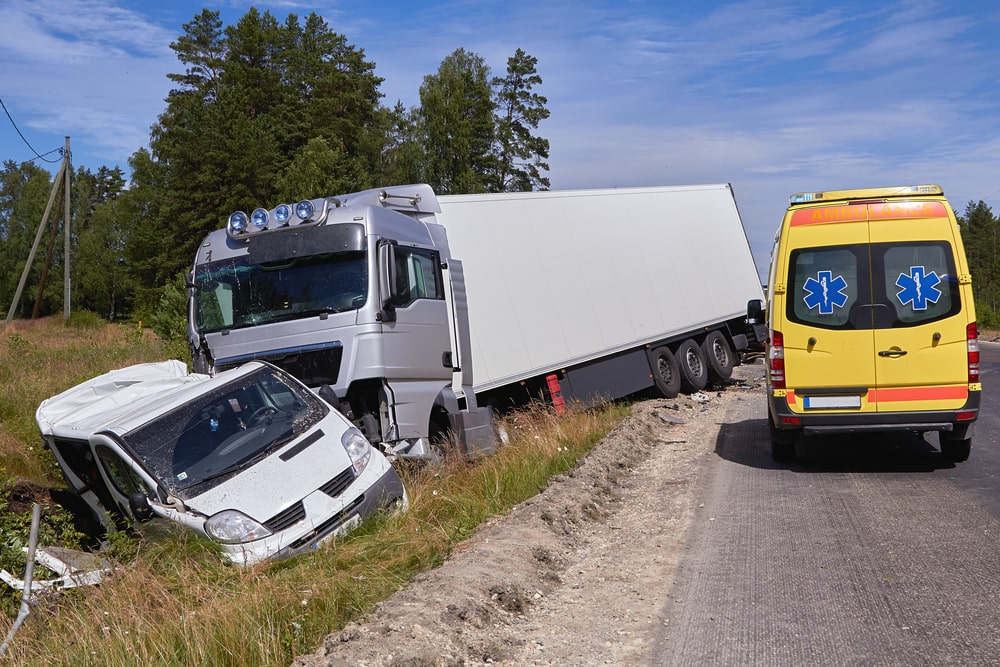


Commercial truck accidents are uniformly serious. But crashes involving trucks hauling steel, flatbeds loaded with coiled steel, structural beams, steel plate, or pipe, tend to produce injuries that go well beyond what most commercial vehicle accidents cause. The reasons are grounded in physics, cargo behavior, and the specific hazards that steel loads create both before and during a collision.
The Physics Behind Steel Cargo Crashes
Steel is among the densest and heaviest cargo types hauled on Wisconsin highways. A flatbed loaded with steel coil can carry cargo approaching the maximum 80,000-pound federal gross vehicle weight limit, with the majority of that weight concentrated in a relatively small footprint. When a vehicle of that mass is involved in a collision, the energy transfer to any smaller vehicle is catastrophic. The stopping distance for a fully loaded steel flatbed at highway speed is dramatically longer than for a passenger vehicle, and the structural damage inflicted on contact is often unsurvivable.
What makes steel cargo crashes distinct is that the hazard does not end with the initial impact. Steel loads that are improperly secured or that shift during a sudden maneuver or collision can become independent projectiles. Coiled steel that breaks free can crush vehicles around it. Steel beams that shift forward during hard braking can penetrate the cab of the truck itself.
How Load Securement Failures Make Crashes Worse
Federal Motor Carrier Safety Administration regulations require specific securement methods for different types of steel cargo. Coiled steel requires binders and blocking. Structural steel requires dunnage and strapping calibrated to the load's weight distribution. When carriers or shippers cut corners on securement, a load that was already dangerous becomes even more so. A Wisconsin steel truck accident lawyer examines cargo securement records, loading documentation, and the physical evidence from the crash to determine whether load failures contributed to the injuries.
Why Injuries in Steel Truck Crashes Tend to Be Catastrophic
The injury patterns in steel cargo truck crashes reflect the forces involved. Common outcomes when a passenger vehicle encounters a steel-loaded commercial vehicle include:
- Traumatic brain injuries from the impact forces involved in high-mass collisions
- Spinal cord damage producing partial or complete paralysis
- Internal organ trauma requiring emergency surgery
- Severe crush injuries to the extremities, sometimes resulting in amputation
- Multiple orthopedic fractures requiring extended surgical repair and rehabilitation
These are not soft-tissue cases. Many victims require surgery, extended hospitalization, and long-term rehabilitation. Some sustain permanent disabilities that prevent them from returning to their prior occupation or from living independently.
The severity of these injuries also affects the financial scope of the claim. Medical costs for catastrophic injuries extend well beyond the acute care phase. Lost earning capacity calculations must account for careers that cannot resume. Pain and suffering damages reflect losses that span years or decades, not weeks.
Johnston | Martineau PLLP is a Minnesota, Wisconsin, and Iowa truck accident firm concentrating on commercial vehicle litigation. Attorneys Christopher Johnston and Christopher Martineau focus exclusively on truck accident cases, including steel cargo crashes and other large commercial vehicle collisions. Free consultations are available.
Pursuing a Claim After a Wisconsin Steel Truck Accident
If you were seriously injured in a crash involving a steel-hauling truck on a Wisconsin highway, speaking with a Wisconsin steel truck accident lawyer as soon as possible after your immediate medical needs are addressed gives you the best opportunity to preserve the evidence your case depends on and understand the full scope of your legal options.